
A Quiet Shift Behind the Scenes
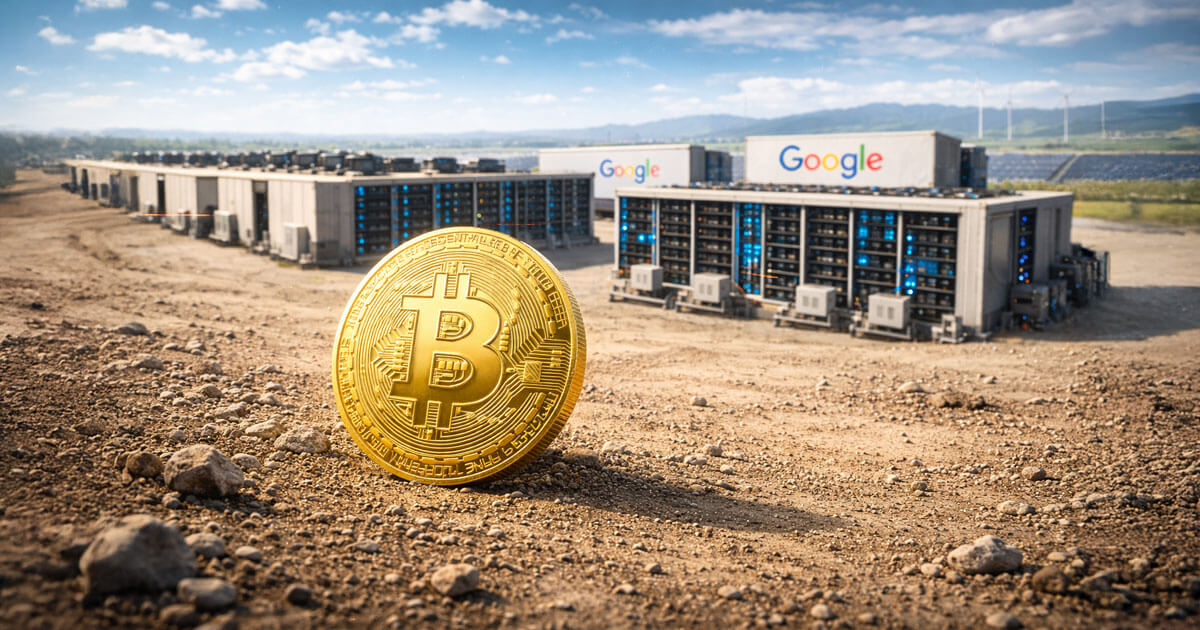
A major change may be unfolding in the Bitcoin mining industry, and it is happening in a way that does not look obvious at first glance. Instead of making a loud public move, Google appears to be supporting a transition that could reshape how mining companies survive and grow. The idea is not about buying these firms directly. It is about helping them move away from a business model tied only to Bitcoin and into one connected to artificial intelligence infrastructure.
This makes the story especially interesting because it is not a traditional corporate takeover. It is a financial strategy that works more quietly in the background. On the surface, it looks like a set of AI hosting agreements. But underneath, it may be creating a new path for Bitcoin miners to reinvent themselves.
How the Mechanism Works
At the core of this shift is a structure that can be described as a shadow credit mechanism. In simple terms, Bitcoin miners own valuable industrial assets such as large power connections, land, and facilities that can be repurposed for AI computing. These assets are attractive because AI companies urgently need energy-ready sites to run large-scale servers.
The financing model becomes powerful when a third-party lease agreement is backed by a stronger name. In this case, long-term obligations tied to AI hosting appear to gain much more credibility because of Google’s support behind them. That support helps transform how lenders see the miners. Instead of treating them only as crypto businesses exposed to Bitcoin price swings, lenders can begin viewing them as infrastructure operators with more stable future income.
Why This Matters Financially
This matters because Bitcoin mining has become a difficult business to fund on its own. Mining revenues are volatile, heavily dependent on market prices, and affected by rising operational costs. Even when Bitcoin prices are high, many mining companies still struggle with shrinking margins and uncertain long-term planning.
AI hosting changes that picture. A long-term lease for AI infrastructure can create predictable revenue for 10 or even 15 years. That kind of cash flow is easier for banks and major investors to understand. It creates a more familiar business case, similar to infrastructure or real estate-backed projects, rather than a purely speculative crypto play. This is where the structure becomes so important. It gives miners a bridge from unstable crypto economics to more bankable AI contracts.
A New Lifeline for Bitcoin Miners
For miners, this could be a lifeline. Many of them already spent years building out access to cheap electricity, industrial land, and high-capacity energy systems. Those were once considered competitive advantages mainly for mining Bitcoin. Now, those same assets may be even more valuable in the AI era.
This means miners are no longer just digital asset producers. They can become landlords or infrastructure providers for AI computing. That is a major identity shift. It turns them from businesses tied to block rewards into companies that can generate recurring income from hosting and power access. If successful, it could completely change how the market values these firms.
Why Google Would Be Interested
Google’s interest in such a model also makes strategic sense. AI development depends heavily on compute power, and compute power depends on electricity and physical capacity. Building new data center infrastructure from scratch takes enormous time, capital, and regulatory effort. By working through existing mining operators that already control energy-rich sites, Google can indirectly secure future capacity much faster.
This gives Google a practical advantage. Rather than fully owning every site, it can support deals that reserve infrastructure access while reducing the burden of direct development. That makes the strategy efficient, flexible, and potentially very powerful. It is not just a financial move. It is also a long-term infrastructure play in the race for AI dominance.
The Risks Beneath the Opportunity
Even so, the model is not without risk. Bitcoin mining operations were originally built for a different purpose. Mining can often tolerate more flexible and interruptible energy use, while AI clients require stronger uptime, reliability, cooling systems, and service standards. That means a mining company cannot simply rename itself an AI host and expect everything to work.
There are also broader concerns. If too much premium power capacity moves from Bitcoin mining into AI hosting, the Bitcoin network itself could eventually feel the impact. Less top-tier infrastructure dedicated to mining may lead to a more expensive or constrained path for future hashrate growth. At the same time, if one major tech company gains indirect influence over a large amount of energy-connected infrastructure, regulators may eventually start asking hard questions.
A Transformation Bigger Than It Looks
What makes this development so important is how subtle it is. It does not arrive with dramatic takeover headlines or flashy acquisition announcements. Instead, it moves through financial support, lease backing, and infrastructure partnerships. But that quiet approach may actually make it more powerful.
If this model continues to expand, it could change the future of both industries. Bitcoin miners may stop being seen only as crypto operators and start being valued as strategic infrastructure companies. Google, meanwhile, may be securing a huge advantage in the AI race without appearing to control the entire process directly. That is why this story feels bigger than a normal partnership. It may be the beginning of a complete rewrite of the mining business model.
FAQs
What is the shadow credit mechanism?
It is a financial setup where lease obligations or project commitments are supported in a way that improves confidence for lenders, without looking like a direct acquisition or ownership move. It works quietly in the background but can unlock major financing.
Why are Bitcoin miners moving toward AI?
Because AI hosting offers more stable and predictable long-term revenue than Bitcoin mining. Mining profits can change quickly, while AI infrastructure deals can provide years of contracted income.
Why would Google support this shift?
Google needs access to power-ready infrastructure for AI growth. Supporting miners that already control these sites can be faster and more efficient than building everything from the ground up.
Is this good or bad for Bitcoin?
It could be both. It may help struggling mining firms survive, but it could also reduce the amount of premium infrastructure dedicated purely to securing the Bitcoin network.
Why is this story important?
Because it suggests a major tech company may be helping reshape the future of Bitcoin mining through finance and infrastructure strategy, not through direct ownership. That makes the move more subtle, but potentially more influential.