

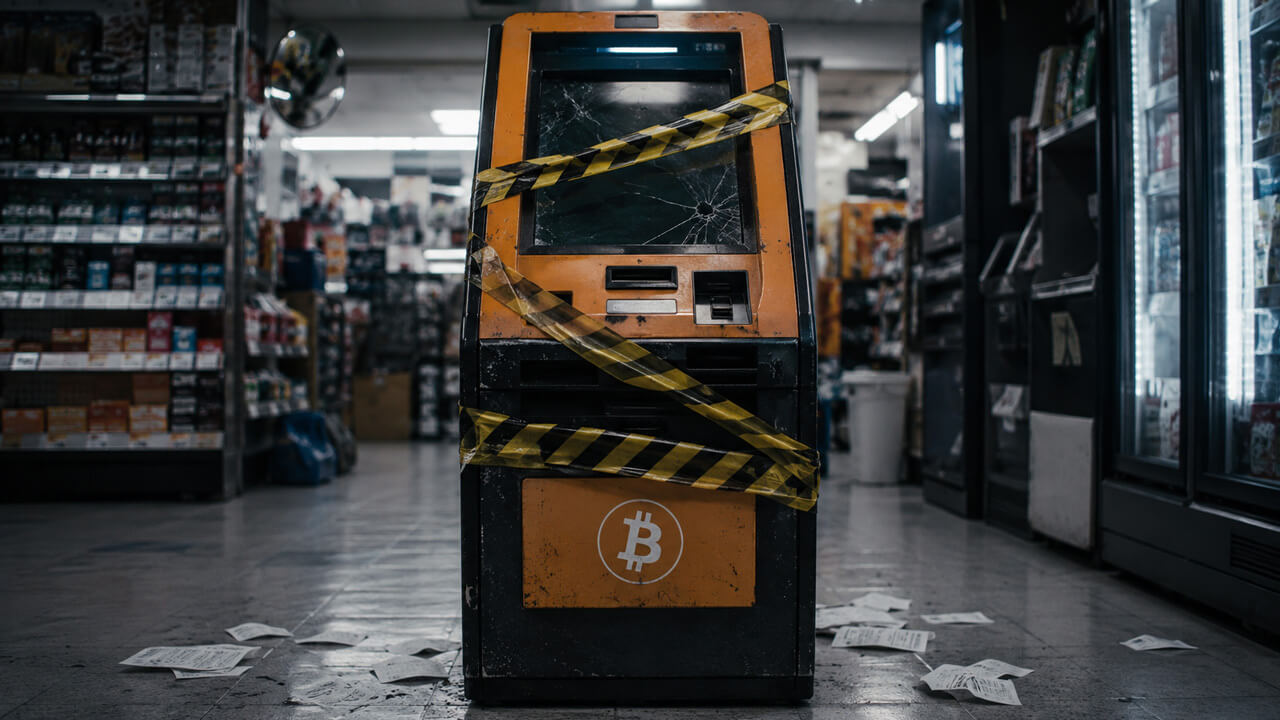
Bitcoin ATMs Are Losing Their Original Promise
Bitcoin ATMs were once seen as one of the easiest ways to bring crypto into the real world. They gave people a physical place to buy Bitcoin with cash, without needing a bank account, an exchange account, or technical knowledge. For cash-preferred users, underbanked communities, and people who wanted quick access to crypto, these machines looked like a simple bridge between traditional money and digital assets. But that bridge is now under heavy pressure. Fraud losses, rising compliance costs, state bans, lawsuits, and extremely high fees are forcing the US Bitcoin ATM industry to face a painful reality: the model may not work at scale anymore.
Bitcoin Depot’s Collapse Shows the Pressure
The collapse of Bitcoin Depot has become a major warning sign for the wider industry. The company was one of the largest Bitcoin ATM operators, with thousands of kiosks across the US and abroad. But its business came under pressure from multiple directions at the same time. Revenue dropped sharply, gross profit collapsed, legal judgments piled up, and management warned about the company’s ability to continue operating. Eventually, the company moved into bankruptcy protection and began winding down operations while preparing to sell assets.
This matters because Bitcoin Depot was not a small side player. If a large operator with thousands of locations cannot survive the current environment, smaller companies may face even greater pressure. The issue is not only poor management or one weak balance sheet. The bigger problem is that the economics of Bitcoin ATMs are being squeezed from every side.
High Fees Were Always a Weak Point
One of the biggest problems with Bitcoin ATMs has always been cost. Many kiosks charge fees far above what users pay on centralized exchanges or mobile crypto apps. In some cases, fees can reach levels that make regular use unrealistic. That may work for urgent one-time purchases, but it is not a strong foundation for mainstream adoption. A customer who loses a large percentage of their cash to fees before even receiving Bitcoin is unlikely to treat the machine as a long-term financial tool.
High fees were easier to defend when Bitcoin ATMs offered something unique: fast cash access without bank links. But as exchanges, wallets, ETFs, and crypto payment apps have improved, the value of that convenience has weakened. Users now have cheaper alternatives. That makes the Bitcoin ATM model look less like a mass adoption tool and more like an expensive niche service.
Fraud Turned the Industry Into a Political Target
The fraud problem has made the situation much worse. Bitcoin ATMs have become common tools in scams where victims are pressured to deposit cash and send crypto to criminals. Once the transaction is completed, the funds are usually gone. Older victims have been hit especially hard, which has made the issue politically powerful. Lawmakers and regulators are more likely to act when a product is seen as harming seniors, vulnerable users, or people with limited financial knowledge.
This has changed the public image of Bitcoin ATMs. Instead of being viewed mainly as access points for financial freedom, they are increasingly being treated as fraud infrastructure. That shift is dangerous for the industry because it gives regulators a clear reason to impose bans, lower transaction limits, stricter identity checks, and warning requirements.
Bans and KYC Rules Cut Into Revenue
Several states have already moved against crypto kiosks, and more restrictions could follow. Some measures include outright bans, criminal penalties for operating kiosks, tighter licensing rules, lower transaction caps, and stronger identity checks. These rules may reduce fraud risk, but they also damage the business model. Bitcoin ATMs depend on transaction volume and high-margin usage. When users face more friction, more warnings, and lower limits, fewer transactions go through.
This creates a difficult cycle. The industry needs compliance to survive politically, but compliance makes the machines less profitable. The safer the kiosk becomes, the less it looks like the fast and easy cash-to-crypto product that attracted users in the first place. That is why regulation is not just a legal issue for operators. It is a direct threat to their economics.
The Industry May Survive, but Smaller
Bitcoin ATMs are unlikely to disappear completely. There is still a narrow use case for people who need in-person cash access to crypto. Some machines may survive in states with friendlier rules, stronger compliance systems, lower limits, and more careful fraud prevention. In that version, Bitcoin ATMs become similar to check-cashing stores: useful for a specific group of customers, but expensive and limited.
The problem is that this is a much smaller vision than the original dream. Bitcoin ATMs were once promoted as a gateway to mass adoption. Now, they may become a regulated cash-conversion niche with thinner margins and fewer locations. That would not kill Bitcoin adoption, but it would change where adoption happens.
Bitcoin Adoption Has Moved Elsewhere
The bigger story is that Bitcoin no longer depends on kiosks. Adoption has shifted toward centralized exchanges, mobile wallets, ETFs, institutional platforms, and regulated custody products. These channels are cheaper, more scalable, and easier to integrate into modern financial systems. For most users, a phone app or brokerage account is simpler than visiting a convenience store kiosk and paying high fees.
That is why the collapse of the Bitcoin ATM model may not hurt Bitcoin itself. It may only show that one early access method has reached its limits. Bitcoin adoption is still growing, but the infrastructure carrying it forward has changed.
Final Thoughts
The US Bitcoin ATM industry is breaking because its strongest selling point has become its biggest weakness. Fast cash access made kiosks useful, but it also made them attractive to scammers. High fees made the model profitable, but they also made it unsuitable for mainstream use. Compliance can make the machines safer, but it also reduces the volume and margins that operators need to survive. Bitcoin ATMs may continue in a smaller, more regulated form, but the dream of thousands of machines driving mass Bitcoin adoption now looks much weaker.
FAQs
Why are Bitcoin ATMs under pressure in the US?
Bitcoin ATMs are under pressure because of fraud losses, high fees, stricter KYC rules, state bans, lower transaction limits, and legal costs. These factors are making the business harder to operate profitably.
Why are Bitcoin ATM fees so high?
Bitcoin ATM fees are high because operators must cover machine costs, cash handling, compliance, location rent, fraud prevention, and business risk. However, these high fees make the machines unattractive compared with exchanges and mobile apps.
Are Bitcoin ATMs used for fraud?
Yes, scammers often use Bitcoin ATMs to pressure victims into sending crypto quickly. Once the money is converted and transferred, recovery is very difficult, which is why regulators are becoming more aggressive.
Will Bitcoin ATMs disappear completely?
Bitcoin ATMs may not disappear completely, but the industry could become much smaller. Machines may survive in compliant, limited-use markets, but they are unlikely to remain a major driver of Bitcoin adoption.