

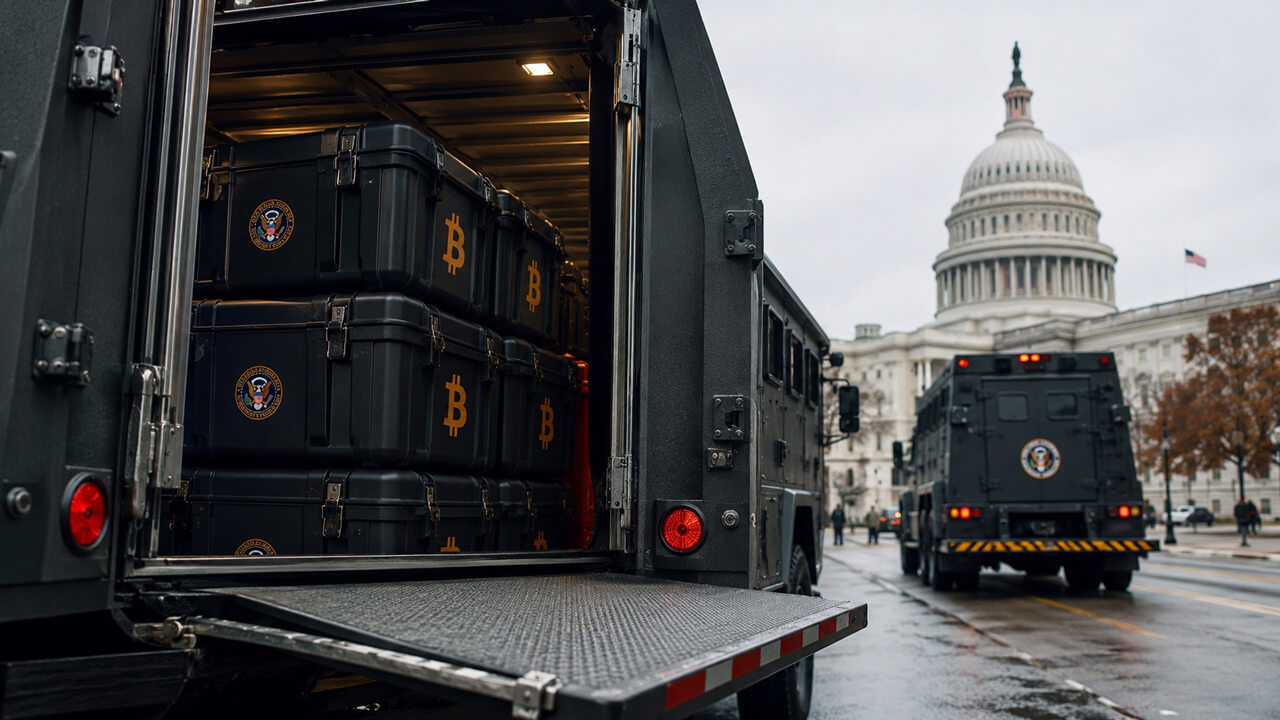
Washington’s Bitcoin Reserve Debate Gets Serious
US lawmakers are making another major push to turn the federal government’s Bitcoin holdings into a formal strategic reserve. The new proposal, called the American Reserve Modernization Act of 2026, would place the government’s Bitcoin under a long-term Treasury-managed structure instead of leaving it scattered across different agencies or subject to future auction decisions. The move matters because the US already controls one of the largest government Bitcoin stashes in the world, mostly through law enforcement seizures. With that stockpile valued at more than $25 billion, lawmakers are now asking whether Bitcoin should be treated as a strategic financial asset rather than something the government sells whenever it chooses.
What the New Act Would Do
The bill would establish a Strategic Bitcoin Reserve inside the US Department of the Treasury. It would also create a separate Digital Asset Stockpile for non-Bitcoin cryptocurrencies held by the federal government. That distinction is important because it places Bitcoin in a different category from other digital assets. Bitcoin would become the main reserve asset, while other tokens would be managed separately. This structure reflects the growing political view that Bitcoin is not just another crypto asset, but a scarce digital commodity that could play a larger role in national financial strategy.
A 20-Year Hold Changes the Market Signal
One of the most important parts of the proposal is the 20-year holding requirement. If the bill becomes law, Bitcoin placed in the strategic reserve would need to be held for at least two decades. That would turn the US government into a long-term holder instead of a potential seller. For the Bitcoin market, this would remove a major uncertainty. Government-held coins have always created concern because large auctions can introduce supply into the market. A legally protected reserve would reduce that fear and send a strong signal that Washington sees Bitcoin as a long-term strategic asset.
Transparency Is a Key Feature
The bill also focuses heavily on transparency. It would require federal agencies to provide a full accounting of digital assets they hold or control. The Treasury would then publish regular Proof of Reserve reports, submit to independent third-party audits, and remain under congressional oversight. This matters because the crypto industry has long argued that public reserves should be verifiable. If the government holds billions of dollars in Bitcoin, the public should know how much exists, where it is custodied, and whether it has moved. Strong reporting rules would make the reserve more credible and harder to use for political messaging without accountability.
Why This Is Bullish for Bitcoin
The bullish case is simple. If the US government formally locks away hundreds of thousands of Bitcoin for 20 years, that supply becomes much less likely to hit the open market. Bitcoin’s price is heavily influenced by supply scarcity and long-term holder behavior. A federal reserve would support the idea that Bitcoin is becoming a legitimate treasury asset. It could also encourage other governments, state treasuries, corporations, and institutions to think more seriously about holding BTC. In markets, symbolism matters. If the world’s largest economy treats Bitcoin as strategic, it becomes harder for traditional finance to dismiss it as only a speculative asset.
Budget-Neutral Growth Is the Next Question
The bill also directs a study into budget-neutral acquisition strategies. This means lawmakers want to explore ways the government could expand its Bitcoin reserve without raising taxes, increasing deficits, or adding to the national debt. That part is politically important because direct Bitcoin purchases with taxpayer money would likely face stronger opposition. A budget-neutral approach gives supporters a way to argue that the reserve can grow without creating a new spending burden. However, the details will matter. The market will want to know whether the government is only holding seized coins or whether it may eventually find lawful ways to acquire more Bitcoin.
Self-Custody Protection Sends Another Message
Another major part of the proposal is the protection of self-custody rights. The bill says the federal government should not impair Americans’ lawful right to own, transfer, or independently secure digital assets. This matters because crypto users often worry that government Bitcoin adoption could come with tighter restrictions on private ownership. By including self-custody language, the bill tries to balance national reserve policy with individual property rights. That makes the proposal more attractive to crypto advocates who want the government to recognize Bitcoin without controlling how citizens use it.
Final Thoughts
The Strategic Bitcoin Reserve proposal could become one of the most important Bitcoin policy debates in Washington. It would not only secure a federal Bitcoin stash worth more than $25 billion, but also reshape how the US government thinks about digital reserves. A 20-year holding rule, Treasury custody, Proof of Reserve reporting, independent audits, and self-custody protections would create a much clearer framework than the current system. The bill still has to survive the political process, and passage is not guaranteed. But even as a proposal, it shows how far the Bitcoin debate has moved. Washington is no longer only asking how to regulate crypto. It is now asking whether Bitcoin belongs on the national balance sheet.
FAQs
What is the Strategic Bitcoin Reserve Act?
The Strategic Bitcoin Reserve Act refers to legislation designed to create a formal Bitcoin reserve inside the US Treasury. It would consolidate federal Bitcoin holdings and manage them as a long-term strategic asset.
How much Bitcoin does the US government hold?
The US government is estimated to hold more than 328,000 Bitcoin, valued at over $25 billion at recent prices. Most of this Bitcoin came from law enforcement seizures and other federal proceedings.
Why is the 20-year holding rule important?
The 20-year holding rule is important because it would prevent the government from quickly selling reserve Bitcoin. This could reduce market uncertainty and strengthen Bitcoin’s long-term scarcity narrative.
Could this help Bitcoin’s price?
It could help Bitcoin’s price by removing a large potential supply source from the market and signaling stronger government recognition of BTC as a strategic asset. However, the long-term impact depends on whether the bill becomes law and how the reserve is managed.