
Bitcoin Enters a Geopolitical Stress Test
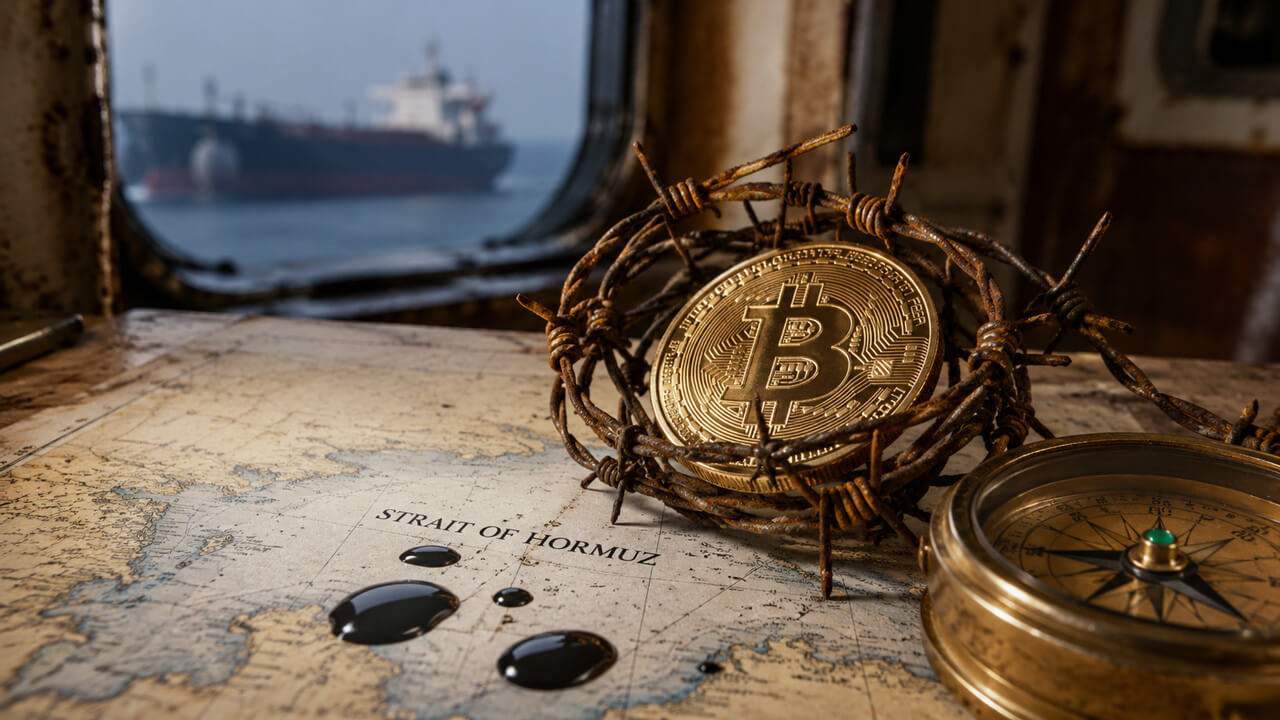
Bitcoin’s neutral money thesis has always sounded strongest in theory. The network does not ask who is sending funds, why they are sending them, or whether a government approves the transfer. It simply processes valid transactions according to code. But the reported idea of Bitcoin-settled ship insurance for vessels crossing the Strait of Hormuz would move that thesis from theory into one of the most politically sensitive corridors in global trade. If such a mechanism becomes real and verifiable, Bitcoin would no longer be discussed only as digital gold or a portfolio hedge. It would be tested as a settlement rail inside a live geopolitical conflict zone.
Why the Strait of Hormuz Matters
The Strait of Hormuz is one of the world’s most important energy chokepoints. Any disruption there can affect oil prices, shipping routes, insurance premiums, inflation expectations, and global market sentiment. When ships face higher risk in the region, maritime insurance becomes more expensive and more complicated. If traditional insurers, banks, or payment channels cannot operate normally because of sanctions or conflict risk, the idea of using Bitcoin for settlement becomes more than a crypto experiment. It becomes a direct challenge to the existing financial and regulatory system that controls global shipping payments.
The Claim Still Needs Caution
The key point is that any Bitcoin-based Hormuz insurance system must be treated carefully unless it is officially confirmed and operational. Reports and public-facing website claims are not the same as a verified government-backed payment system. The region has already seen scam-related crypto messages connected to fake safe-passage demands, which means shipping companies, insurers, and regulators have strong reasons to be skeptical. In this environment, even a rumor can create confusion because crypto payments are fast, irreversible, and easy for fraudsters to imitate. Before treating any Hormuz-linked Bitcoin payment system as real, the market would need clear confirmation, visible transaction patterns, and reliable attribution.
Neutral Money Meets Sanctions Law
This is where Bitcoin’s biggest ideological test begins. At the base layer, Bitcoin is politically neutral. A transaction can be broadcast and confirmed if it follows network rules. But neutrality at the protocol level does not protect exchanges, brokers, insurers, shipping firms, or banks from sanctions law. If a Bitcoin address becomes linked to a sanctioned payment system, regulated companies may be forced to block related flows, freeze deposits, or refuse service. That creates a split between what Bitcoin can technically do and what institutions are legally allowed to support. The blockchain may keep settling, but the regulated perimeter around it can tighten quickly.
The Test for Bitcoin’s Institutional Image
Bitcoin has spent recent years building a cleaner institutional image through spot ETFs, corporate treasury adoption, custody products, and Wall Street access. Many investors now view BTC as a scarce asset, a hedge against monetary weakness, or a long-term macro allocation. A verified Hormuz payment mechanism would complicate that image. It would show Bitcoin working exactly as designed, but in a context that major institutions may not want to touch. The same feature that makes Bitcoin attractive to censorship-resistant money advocates could become a liability for ETF issuers, banks, and compliance teams that must avoid sanctioned flows.
Why This Could Fragment Liquidity
If Hormuz-linked Bitcoin payments become traceable, liquidity could fragment around tainted coins. Some exchanges may block deposits connected to identified addresses, while less regulated venues may continue processing them. OTC desks and brokers could become more cautious, especially if regulators issue warnings or enforcement actions. This would not stop Bitcoin itself, but it could make certain coins harder to move through compliant channels. That is the practical meaning of the neutral money debate. Bitcoin may remain neutral, but the market around Bitcoin is not neutral. Liquidity depends on intermediaries, and intermediaries operate under law.
A Proof of Concept With a Cost
For Bitcoin supporters, a real Hormuz insurance payment system would be powerful proof that BTC can function where traditional finance cannot. A sanctioned state, locked out of major banking channels, using Bitcoin to settle maritime insurance would demonstrate the network’s ability to move value without permission. But that proof would come with a major cost. It would give regulators a clear example of Bitcoin being used to route around financial restrictions in a strategic trade corridor. Instead of strengthening Bitcoin’s institutional case, it could increase pressure on compliance systems, wallet screening, and exchange monitoring.
Final Thoughts
Bitcoin payments for ship insurance in the Strait of Hormuz would be one of the clearest real-world tests of crypto’s neutral money thesis. If the system remains unverified or turns out to be another scam narrative, the impact will likely fade. But if it becomes operational and generates identifiable Bitcoin flows, the debate changes completely. Bitcoin would prove that it can settle value in places where traditional rails are blocked, while also forcing institutions to confront the legal and reputational risks of that neutrality. The base layer may not choose sides, but governments, exchanges, insurers, and investors will. That tension is where Bitcoin’s next major geopolitical test begins.
FAQs
Why would Bitcoin be used for Hormuz ship insurance?
Bitcoin could be used because it allows direct settlement without relying on traditional banks or correspondent payment systems. In a high-risk or sanctioned environment, that can make Bitcoin attractive to parties who cannot easily access normal financial rails.
Is the Hormuz Bitcoin insurance system confirmed?
The idea should be treated cautiously unless there is official confirmation and verifiable payment activity. Reports and website claims are not enough to prove that a real operational system exists.
Why does this test Bitcoin’s neutral money thesis?
It tests the thesis because Bitcoin can technically process transactions without political judgment, but regulated intermediaries still have to follow sanctions and compliance rules. That creates tension between protocol neutrality and real-world enforcement.
Could this affect Bitcoin’s market image?
Yes, it could. Some supporters may see it as proof of Bitcoin’s censorship resistance, while institutions may see it as a compliance risk. The same event could strengthen Bitcoin’s ideological case and weaken its institutional comfort at the same time.