

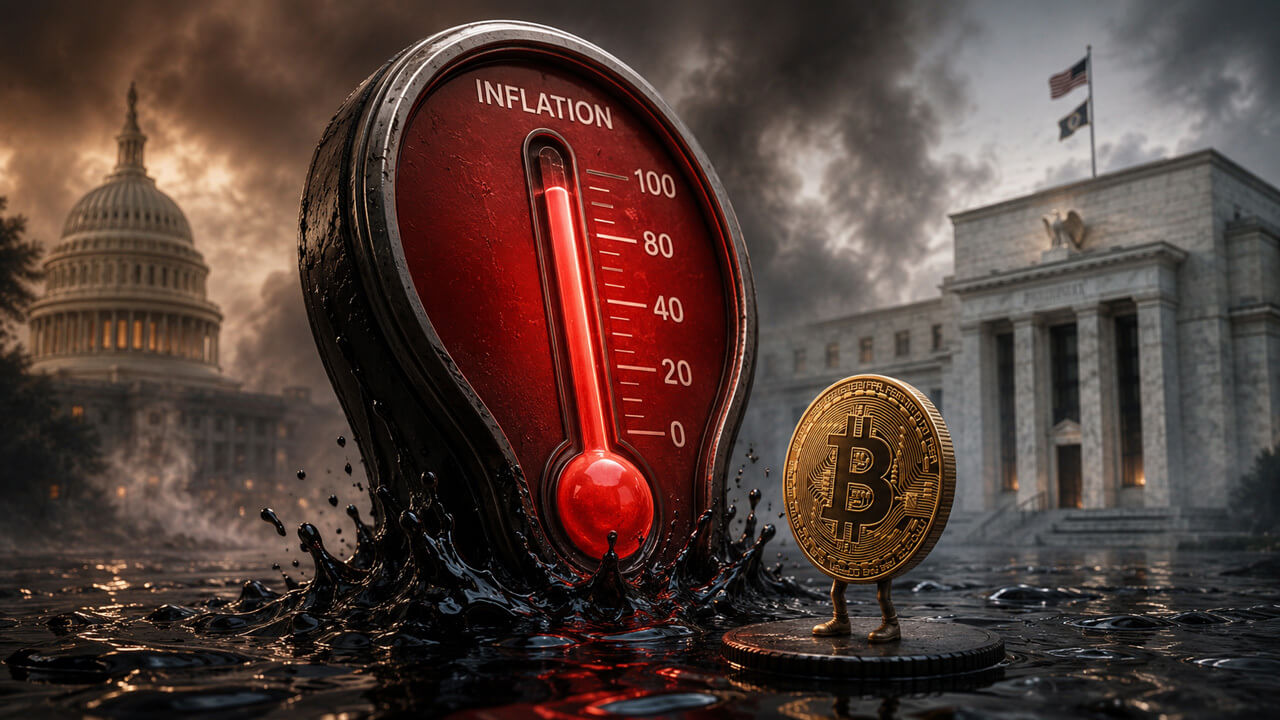
Bitcoin’s 2026 Path Now Runs Through Oil
Bitcoin’s next major move is no longer being shaped only by ETF demand, technical levels, or crypto market sentiment. The bigger force now is oil. The disruption around the Strait of Hormuz has turned from a regional energy shock into a global policy problem, and that changes the entire macro setup for Bitcoin. When oil supply pressure spreads across major economies, it affects inflation, central bank decisions, consumer spending, government support programs, bond yields, and the dollar. For Bitcoin, that means the route through 2026 has become much narrower. BTC must survive the oil-driven liquidity squeeze long enough for markets to decide whether policy support becomes bigger than inflation pressure.
Why the Oil Shock Matters for BTC
The Strait of Hormuz is one of the world’s most important oil routes, so any disruption there can quickly become a global inflation problem. If crude and refined product flows remain heavily restricted, oil prices can stay elevated and force governments into emergency action. Higher oil prices feed into transport costs, food prices, manufacturing expenses, and household budgets. That keeps inflation sticky and makes central banks more cautious. For Bitcoin, this is dangerous because BTC usually performs best when liquidity is improving, real yields are falling, and investors are comfortable taking risk. A prolonged energy shock can push the market in the opposite direction.
Eight Economies Show the Contagion Is Real
The biggest warning sign is that the oil problem has already moved into government policy across multiple economies. Countries including Sri Lanka, Korea, India, Pakistan, Japan, Germany, China, and the UK have been tied to different fuel-control or support measures, including rationing systems, driving restrictions, fuel subsidies, price controls, tax relief, remote-work steps, and industrial support. These actions show that the oil shock is no longer just a commodity-market event. It is becoming a political and economic management problem. Once governments start capping prices, releasing reserves, cutting taxes, or limiting demand, Bitcoin traders must watch policy decisions as closely as price charts.
The Problem Is Inflation Versus Support
Bitcoin now faces a difficult macro fork. On one side, high oil prices can keep inflation pressure alive, delay rate cuts, strengthen the dollar, and keep real yields elevated. That would make Bitcoin behave more like a high-beta risk asset, vulnerable to de-risking and ETF outflows. On the other side, if the oil shock becomes severe enough, governments and central banks may be forced to protect growth through fiscal support, reserve releases, and eventually easier policy expectations. That second path could help Bitcoin reclaim its scarce-asset narrative. The challenge is that both outcomes can come from the same oil shock, which makes the signal very difficult to read.
Bitcoin Must Hold the Key Support Zone
The most important area for Bitcoin is the $78,000 to $80,000 zone. This is not only a technical level now; it is a macro confidence line. If BTC holds this area while oil stress continues, it would suggest that ETF demand, long-term holders, and scarcity-driven buyers are strong enough to absorb the shock. But if Bitcoin loses this range, the market may begin treating oil contagion as a liquidity squeeze rather than a debasement trade. In that bearish version, Bitcoin could first test the $76,000 to $78,000 area, then risk a deeper move toward $70,000 to $73,000 if macro pressure intensifies.
ETF Demand Is the Main Safety Valve
ETF flows are now one of Bitcoin’s most important defenses. If institutions keep buying BTC during oil-driven uncertainty, Bitcoin can hold support and prepare for another recovery attempt. Strong ETF inflows would show that investors still view Bitcoin as a macro asset worth accumulating during stress. But if ETF flows fade or reverse, Bitcoin becomes more exposed to the same financial tightening hurting stocks, credit, and other risk assets. The risk is not that Bitcoin needs a crypto-specific failure to fall. It only needs oil-driven inflation and a strong dollar to force investors into cash.
The One Bullish Route Through 2026
Bitcoin’s only bullish route through 2026 is clear but demanding. BTC must hold $78,000 to $80,000, reclaim roughly $82,500, build strength through the $88,000 to $92,000 area, and then retest $100,000. If that happens while real yields soften, the dollar stops rising, and ETF demand keeps appearing on dips, Bitcoin could begin moving back toward the $115,000 to $125,000 range later in the year. But that path requires markets to believe that policy support will eventually outweigh the inflation drag from oil. Without that belief, every rally risks turning into a liquidity trap.
Final Thoughts
Bitcoin’s 2026 outlook has become a policy test before it is a price test. The oil shock has spread across major economies and forced governments to respond with emergency tools. That makes Bitcoin’s path more complicated because the same policies can either keep inflation sticky or signal future support. For now, BTC must defend the $78,000 to $80,000 range and prove that buyers are still willing to step in during macro stress. If it does, the scarce-asset trade remains alive. If it fails, the oil shock could turn Bitcoin’s recovery into another high-beta selloff.
FAQs
Why does the oil shock matter for Bitcoin?
The oil shock matters because higher energy prices can keep inflation elevated, delay rate cuts, strengthen the dollar, and reduce investor appetite for risk assets. Bitcoin is highly sensitive to liquidity, so oil-driven macro pressure can directly affect BTC demand.
What is Bitcoin’s most important support level now?
Bitcoin’s most important support zone is around $78,000 to $80,000. Holding this area would support the bullish case, while losing it could open the door to deeper downside levels.
Can Bitcoin still reach higher levels in 2026?
Yes, Bitcoin can still move higher in 2026 if ETF demand remains strong, policy support improves liquidity expectations, and BTC reclaims key levels such as $82,500, $88,000 to $92,000, and eventually $100,000.
What is the biggest risk for Bitcoin right now?
The biggest risk is that oil-driven inflation keeps financial conditions tight. If real yields stay high, the dollar remains strong, and ETF flows weaken, Bitcoin could trade more like a risk asset under pressure than a scarce-asset hedge.