

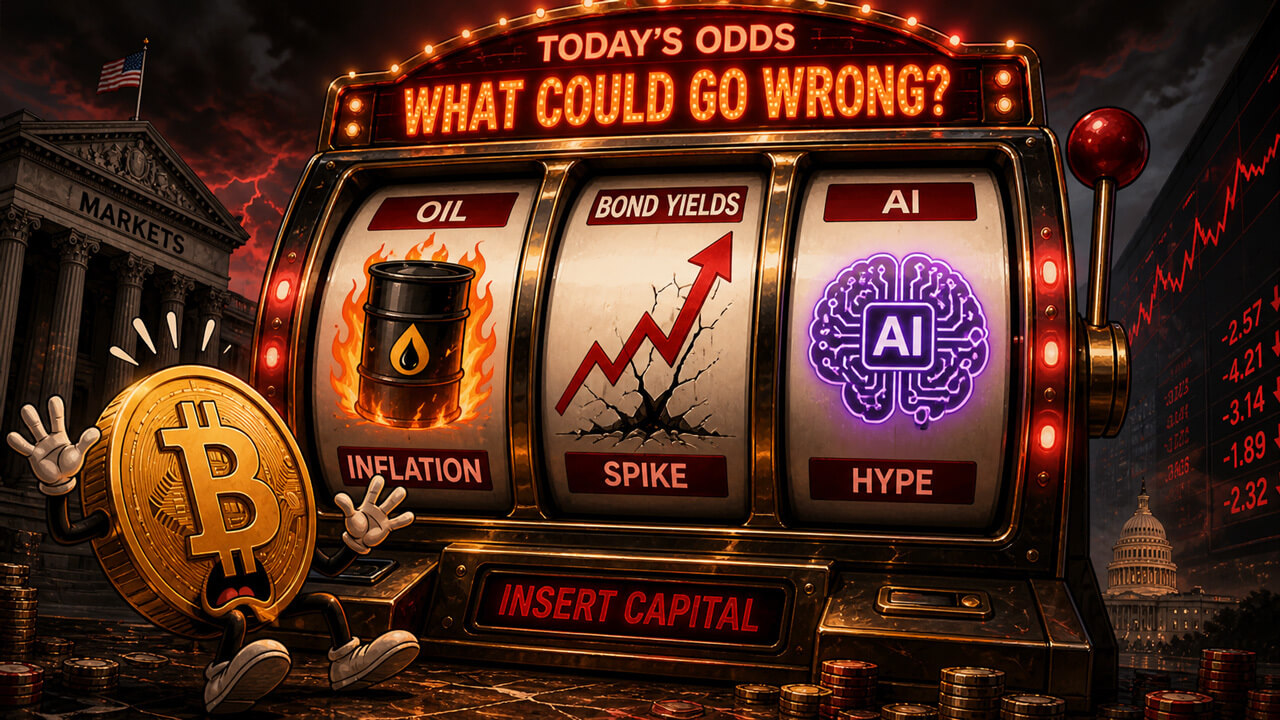
Bitcoin’s Recovery Is No Longer Just a Crypto Story
Bitcoin’s move back above the $80,000 level looked like a strong recovery signal, but the structure behind the rebound suggests something more complex is happening. Instead of being driven only by crypto-native catalysts such as ETF demand, exchange flows, or on-chain accumulation, Bitcoin’s latest rally appears closely connected to a broader risk-on move in global technology markets. The most important part of this setup is the growing connection between Bitcoin and AI-linked equities, especially chip stocks in Asia and major technology indexes in the United States. That connection creates opportunity, but it also introduces a new risk channel that Bitcoin holders may not be fully watching.
The AI Trade Is Now Touching Bitcoin
The rally gained momentum as Asian technology and semiconductor stocks surged. Major chip-related names in South Korea and Taiwan climbed sharply, while broader regional indexes linked to AI demand also moved higher. This matters because Bitcoin’s $80,000 reclaim came during the same window when investors were aggressively buying AI-related risk. In simple terms, Bitcoin was not moving in isolation. It was being pulled into the same market mood that lifted chipmakers, technology shares, and other high-growth assets.
That does not mean Bitcoin has become an AI stock. Bitcoin still has its own supply structure, monetary narrative, ETF market, and crypto-specific trading behavior. But in modern portfolios, it increasingly sits beside other liquid risk assets. When investors feel confident about technology growth and AI demand, Bitcoin can benefit from that same appetite. The problem is that this also means Bitcoin may now react negatively if the AI trade cools.
ETFs Have Changed Bitcoin’s Market Behavior
Spot Bitcoin ETFs have made it easier for traditional investors to buy Bitcoin inside regular brokerage accounts. That has helped expand access and increase institutional participation, but it has also changed the way Bitcoin responds to broader markets. When Bitcoin was harder to access, its price action was more separated from ordinary equity portfolio flows. Now, investors can move in and out of Bitcoin exposure with the same ease as buying a stock or ETF.
This creates a bridge between crypto and traditional market sentiment. If investors are rotating into risk, Bitcoin ETFs can attract fresh demand. If investors suddenly reduce exposure to technology or high-beta assets, those same ETF channels can transmit selling pressure back into Bitcoin. This is why the latest rebound is important. The move above $80,000 may be bullish, but it also shows that Bitcoin is becoming more sensitive to risk signals outside the crypto market.
ETF Demand Still Needs to Prove Itself
Another key factor is whether ETF demand can remain steady. A strong inflow day can support confidence, but one day of demand is not the same as a sustained institutional buying trend. Recent ETF flows have been uneven, with outflows appearing before a rebound in demand. That unevenness suggests that Bitcoin is still dependent on broader risk appetite rather than a clean, one-way accumulation cycle.
For the rally to become more convincing, Bitcoin needs ETF demand to remain broad across multiple issuers, not just concentrated in one or two large funds. If ETF inflows continue while Bitcoin holds the low-$80,000 area, the market may treat the move as a real recovery. But if ETF demand fades quickly, the $80,000 rebound could start to look more like a short-term risk-on trade than a durable breakout.
The Real Risk Is Hidden Correlation
The biggest risk for ordinary investors is hidden correlation. A portfolio may look diversified on the surface if it includes Bitcoin, AI stocks, tech funds, and crypto-related equities. But if all of those assets rise and fall because of the same risk appetite, the protection may be weaker than it appears. Bitcoin can still serve a unique long-term role, but in the short term, it may behave like another high-beta asset tied to liquidity and investor confidence.
This is especially important because many investors may be watching the wrong signals. A Bitcoin holder may focus only on resistance levels, ETF flows, or exchange data while ignoring chip stocks, Nasdaq momentum, and AI earnings. If Bitcoin is now reacting to the same forces driving AI equities, then weakness in that sector could matter as much as a crypto-specific headline.
What Bitcoin Needs to Show Next
The next test is whether Bitcoin can hold the low-$80,000 zone and move toward the next resistance area without losing ETF support. A healthy continuation would require alignment between several forces: stable ETF demand, strong risk appetite, controlled macro pressure, and continued confidence in technology markets. If those signals remain supportive, Bitcoin’s rebound could become more than a temporary relief move.
However, if AI stocks reverse, ETF flows weaken, or macro pressure returns through a stronger dollar and higher yields, Bitcoin could lose momentum quickly. The same market channel that helped lift Bitcoin can also transmit downside pressure. That is the main lesson from this rebound. Bitcoin is gaining access to deeper pools of capital, but that access comes with more exposure to traditional market shocks.
Final Thoughts
Bitcoin’s reclaim of $80,000 is a positive technical and psychological signal, but it should not be viewed in isolation. The rally shows how deeply Bitcoin is now connected to the broader risk-on environment, especially the AI and semiconductor trade. ETF access has made Bitcoin easier to buy, but it has also made it easier for traditional market sentiment to influence its price.
For now, the setup remains constructive as long as ETF demand holds and AI-led risk appetite stays strong. But investors should understand the new risk channel clearly. Bitcoin may still be Bitcoin, but in today’s market, it can also trade like a liquid expression of the same risk appetite powering AI stocks.
FAQs
Why is Bitcoin’s $80k rebound linked to AI stocks?
Bitcoin’s rebound happened alongside a strong rally in AI-related technology and semiconductor stocks. This suggests that the move was partly driven by broader risk appetite rather than only crypto-specific demand.
Does this mean Bitcoin is becoming an AI stock?
No, Bitcoin is not an AI stock. However, it can behave like a high-beta risk asset when investors are buying technology, growth, and speculative markets. That makes its short-term price action more connected to AI-driven market sentiment.
Why do Bitcoin ETFs matter in this setup?
Bitcoin ETFs allow traditional investors to buy Bitcoin through regular brokerage accounts. This increases demand during risk-on periods, but it also means Bitcoin can face selling pressure when investors reduce exposure to risky assets.
What could weaken Bitcoin’s recovery?
Bitcoin’s recovery could weaken if AI stocks reverse, ETF inflows fade, the dollar strengthens, Treasury yields rise, or investors move away from risk assets. These factors could reduce the support behind the $80,000 rebound.