

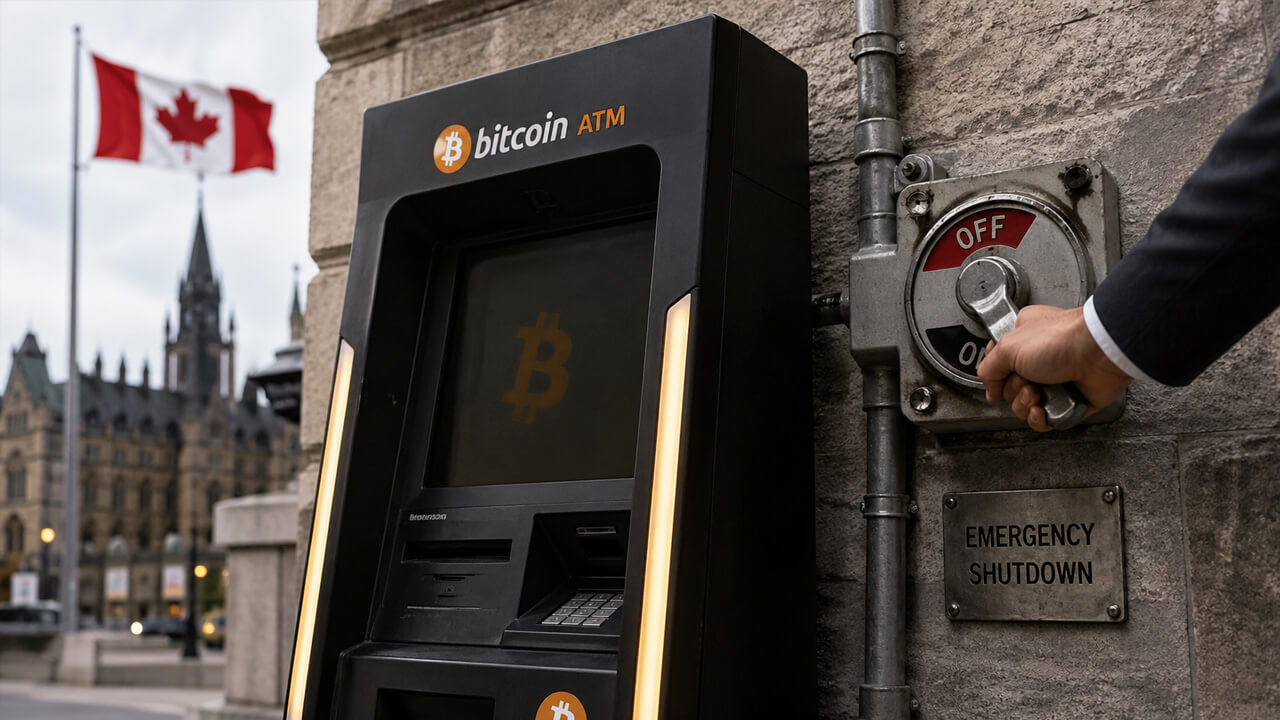
Canada’s Crypto ATM Debate Is Getting Serious
Canada is moving toward one of the strongest crackdowns on crypto ATMs in any major economy, and the debate is no longer only about Bitcoin access. It has become a wider political question about fraud, consumer protection, and how far governments should go when a crypto product becomes closely associated with crime. Crypto ATMs were once promoted as a simple way for ordinary people to buy Bitcoin with cash, especially for users who did not want to deal with complex exchanges. Now, that same simplicity is being treated as the core problem.
The issue is that crypto ATMs make cash-to-crypto transfers fast, physical, and often difficult to reverse once completed. For legitimate users, this can feel convenient. For scammers, it can create an easy path to move stolen money. When victims are pressured into sending funds through these machines, the transfer can become almost impossible to recover. That is why Canadian officials are now looking at crypto ATMs not just as financial tools, but as high-risk access points that may be helping fraud grow.
Why Crypto ATMs Became an Easy Target
Crypto ATMs are different from online exchanges because they are highly visible in public places such as convenience stores, gas stations, and shopping centers. This makes them easy for regulators and politicians to point to when discussing crypto-related fraud. Unlike decentralized finance platforms or blockchain bridges, crypto ATMs do not require technical explanations. The public can understand the concern quickly: a victim puts cash into a machine, follows a scammer’s instructions, and loses money.
That simplicity has made crypto ATMs politically vulnerable. Governments often move faster against risks that are easy to explain to voters. If a product is seen as helping criminals target elderly people, new investors, or financially vulnerable users, it becomes difficult for the industry to defend that product only by talking about innovation. In this case, the debate is not whether Bitcoin itself should exist. The debate is whether unattended cash-to-crypto machines create more harm than value.
Fraud Concerns Are Driving the Crackdown
The strongest argument behind the proposed ban is the scale of fraud losses. Canadians have reported large amounts of money lost to scams in recent years, and authorities believe reported losses may represent only a small part of the real number. That makes the problem much bigger than official figures suggest. Crypto ATMs are being described as one of the main tools scammers use because they allow victims to send money quickly without the same level of human review that might happen inside a bank branch or regulated financial office.
This is where the industry faces a serious challenge. It can argue that crypto ATMs have legitimate uses, but regulators are focused on the damage caused when those machines are used for fraud. Warning signs, transaction limits, and identity checks may reduce some risk, but they may not fully solve the problem if criminals continue to rely on these machines. For the government, a ban may appear cleaner and easier than trying to repair a system that officials believe is already being abused.
Who Could Be Hurt by a Ban?
A full ban would not necessarily mean Canadians lose all access to crypto. People could still buy digital assets through regulated exchanges and other approved financial channels. However, the impact would not be equal for every user. Some people rely on crypto ATMs because they are cash-based, underbanked, privacy-conscious, or making small purchases. For these users, removing ATMs could close one of the few simple entry points into Bitcoin.
This creates a difficult policy tradeoff. On one side, crypto ATMs may be helping scammers move stolen funds. On the other side, they also provide access for people who may not easily use traditional online platforms. The government appears to have decided that the fraud risk is more important than the access benefit. That decision shows how crypto policy is changing: regulators are becoming more willing to reduce access if they believe a product creates major consumer harm.
Canada Could Influence Other Countries
Canada’s move could become important beyond its own borders. Other countries have already taken action against crypto ATMs in different ways, including stricter registration rules, enforcement pressure, and transaction limits. But an outright ban from a major economy would send a stronger message. It would show that governments may remove a crypto product entirely if it becomes too closely linked to scams.
This could create pressure on other retail crypto products as well. Any service that allows fast, low-friction access to digital assets may face similar attention if fraud cases rise. Stablecoin on-ramps, prepaid crypto cards, and self-custody apps could all come under more scrutiny if regulators believe they are being used to exploit consumers. The bigger lesson is that convenience can become a regulatory weakness when criminals use that convenience better than ordinary users do.
Final Thoughts
Canada’s possible crypto ATM ban shows how quickly the public image of a crypto product can change. What started as a symbol of Bitcoin accessibility is now being treated as a fraud risk and a political liability. The proposal does not mean Canada is banning crypto itself, but it does show that governments are willing to remove specific access points when they believe consumer harm is too high.
For the crypto industry, the message is clear. Products that touch everyday users must prove they can protect them. If they cannot, regulators may not wait for better compliance systems or industry promises. They may simply shut the door. Crypto ATMs helped bring Bitcoin into public spaces, but in Canada, that visibility may now be the reason they are facing removal.
FAQs
Why does Canada want to ban crypto ATMs?
Canada wants to ban crypto ATMs because officials believe these machines are being used heavily in fraud and money laundering. Scammers can pressure victims into sending cash through crypto ATMs, and once the transaction is completed, the money is very difficult to recover.
Does this mean Canada is banning Bitcoin?
No, this does not mean Canada is banning Bitcoin. The proposal is focused on crypto ATMs, especially the unattended cash-to-crypto model. Canadians would still be able to access crypto through other regulated platforms and financial services.
Who uses crypto ATMs legally?
Some legitimate users rely on crypto ATMs because they prefer cash, do not use regular banking services, want quick access, or are making small crypto purchases. A ban could affect these users even though the main target is fraud prevention.
Could other countries follow Canada’s approach?
Yes, other countries could follow if they believe crypto ATMs are creating more fraud risk than public benefit. Canada’s approach may become a model for stricter action against retail crypto products that are easy for scammers to exploit.