

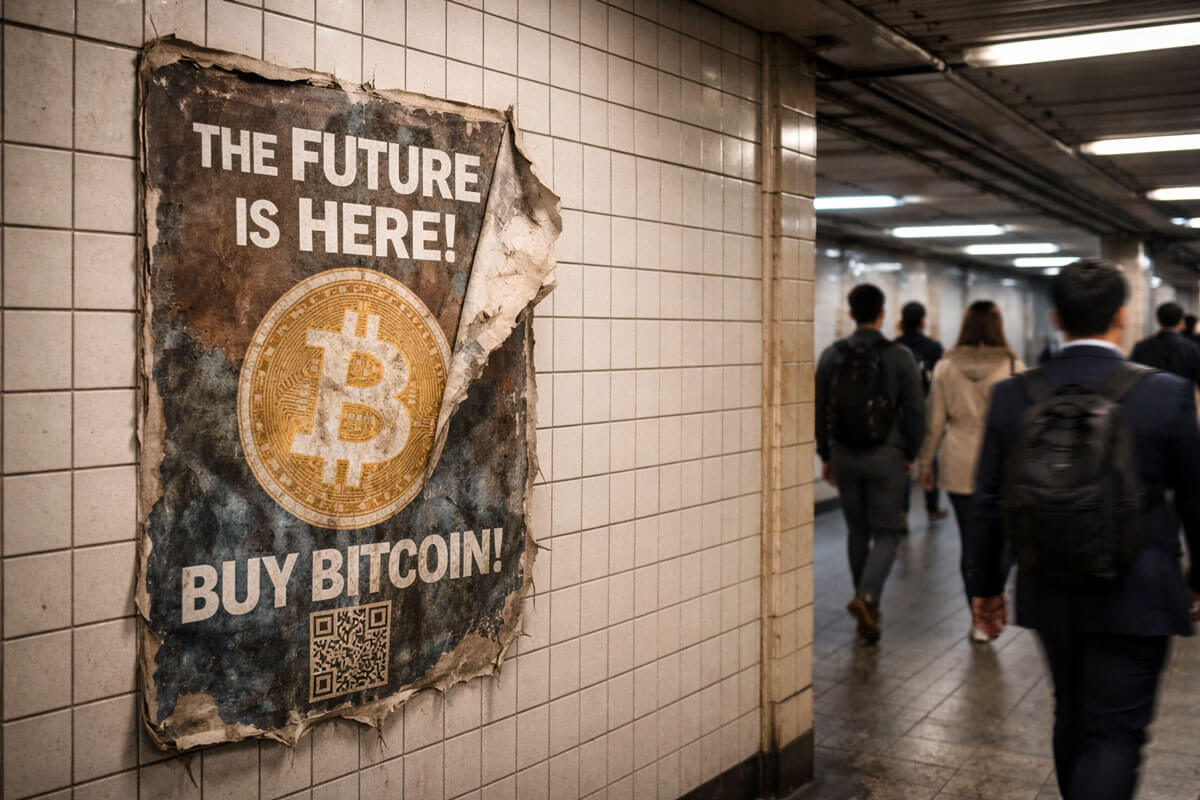
Bitcoin Has Won Institutions, But Not the Public
Bitcoin has come a long way since its explosive rise in 2017. What was once viewed as a speculative experiment is now embraced by some of the world’s largest financial institutions. Major asset managers offer Bitcoin investment products, spot ETFs have opened doors for traditional investors, and Wall Street has largely accepted Bitcoin as a legitimate asset class. Yet despite these milestones, one surprising reality remains: global public interest in Bitcoin still has not returned to the feverish levels seen during the 2017 bull run.
This disconnect raises an important question. If Bitcoin has matured and gained institutional legitimacy, why does retail excitement appear more muted? The answer lies in how the market has evolved. Bitcoin may have won over professional investors, but mainstream curiosity now behaves very differently than it did during its early hype-driven years.
2017 Was Driven by Retail Mania
The 2017 Bitcoin boom was fueled by something unique — mass public fascination. Bitcoin wasn’t just an investment story; it was a cultural phenomenon. Everyday people who had never owned stocks or followed financial markets were suddenly opening exchange accounts. Search activity surged as people rushed to understand what Bitcoin was and whether they were missing out on a once-in-a-lifetime opportunity.
Much of that excitement was driven by novelty. Bitcoin represented rebellion against traditional finance, and stories of overnight millionaires fed speculative mania. For many newcomers, the appeal wasn’t long-term conviction but the fear of missing out.
Today’s market is very different. Bitcoin is no longer a mysterious underground asset. It is more familiar, more regulated, and in many ways less shocking. Familiarity often reduces the explosive curiosity that comes with something new.
Wall Street Adoption Changed the Narrative
One reason public interest may appear lower is because Bitcoin has shifted from a retail spectacle to an institutional asset. Instead of being discussed primarily in online forums and social media communities, Bitcoin is increasingly treated like a macroeconomic instrument tied to liquidity, interest rates, and risk sentiment.
This changes who is driving demand. In 2017, retail investors dominated headlines. In today’s environment, pension funds, hedge funds, and wealth managers are playing a larger role. Their participation may support prices without generating the same kind of viral public enthusiasm.
Ironically, Bitcoin’s maturation may have made it seem less exciting to the average person. As an asset becomes more integrated into traditional finance, it can lose some of the disruptive aura that originally attracted mass attention.
Higher Prices Do Not Always Mean Higher Curiosity
Another reason global interest may seem subdued is that price alone no longer guarantees search frenzy. During previous cycles, rapid price increases drew waves of newcomers. But markets have become more sophisticated, and many people now encounter Bitcoin exposure indirectly through funds, retirement accounts, or financial advisors.
That means fewer people may be searching “What is Bitcoin?” even as more capital enters the asset.
There is also greater competition for attention. In 2017, crypto dominated speculative conversations. Today, Bitcoin competes with artificial intelligence stocks, memecoin speculation, tokenized assets, and countless other narratives. Investor attention has become fragmented.
The result is a market where capital can flow into Bitcoin without creating the same broad public obsession.
Macro Conditions Have Changed the Psychology
Global economic conditions have also altered investor behavior. In 2017, loose monetary policy and speculative appetite created an ideal environment for risk assets. Today, inflation fears, high interest rates, and geopolitical uncertainty have made many investors more cautious.
Even those interested in Bitcoin may approach it differently. Rather than viewing it as a lottery ticket, many now see it as a strategic hedge or portfolio allocation. That mindset generates steadier adoption but less emotional excitement.
In other words, lower hype does not necessarily mean weaker fundamentals. It may reflect a healthier and more mature market.
Mainstream Adoption Looks Different This Time
Another overlooked factor is that mainstream adoption may be happening in quieter ways. In the past, adoption was measured through hype, social chatter, and retail signups. Today, it may be showing up through ETF inflows, corporate treasury holdings, payment integrations, and long-term institutional allocations.
That form of adoption is less visible to search engines and trend trackers, but potentially far more significant.
The irony is that Bitcoin may be more embedded in global finance than ever, even while appearing less dominant in public conversation.
What Lower Retail Frenzy Could Mean for Bitcoin
Some analysts see subdued retail enthusiasm as a bullish sign. Historically, euphoric public participation often marked overheated conditions. Lower speculative frenzy could suggest the market is being supported by stronger hands and more durable capital.
Institutional demand tends to be less emotional and less reactive than retail speculation. If Bitcoin’s growth increasingly depends on structural adoption rather than hype cycles, future rallies may look different — potentially slower, steadier, and more sustainable.
Rather than signaling weakness, lower 2017-style mania could indicate Bitcoin is evolving beyond its speculative roots.
Conclusion
Bitcoin’s global interest being below its 2017 peak may seem surprising at first, especially after major Wall Street adoption. But it reflects a transformation in the asset itself. Bitcoin has moved from a retail-driven curiosity to a more established financial instrument. Public hype may be lower, but institutional confidence has rarely been stronger.
In many ways, Bitcoin’s quieter popularity may be a sign of maturity, not decline. The crowd may be less euphoric than in 2017, but the foundations supporting Bitcoin today could be far stronger.
FAQs
Why is Bitcoin search interest lower than in 2017?
Search interest was driven by retail mania and novelty in 2017. Today, Bitcoin is more established, and adoption often happens through institutions rather than public hype.
Does lower public interest mean Bitcoin is weakening?
Not necessarily. Many see it as a sign the market is maturing, with demand increasingly driven by long-term investors rather than speculation.
How has Wall Street changed Bitcoin adoption?
Wall Street has shifted Bitcoin from a fringe asset toward mainstream finance through ETFs, institutional allocations, and broader market integration.
Why doesn’t rising Bitcoin price trigger the same excitement anymore?
Investors now have more competing narratives and often gain exposure indirectly, reducing the dramatic retail curiosity seen in earlier cycles.
Could lower hype actually be positive for Bitcoin?
Yes. Some analysts believe reduced speculative frenzy can lead to healthier price action and stronger long-term market foundations.