

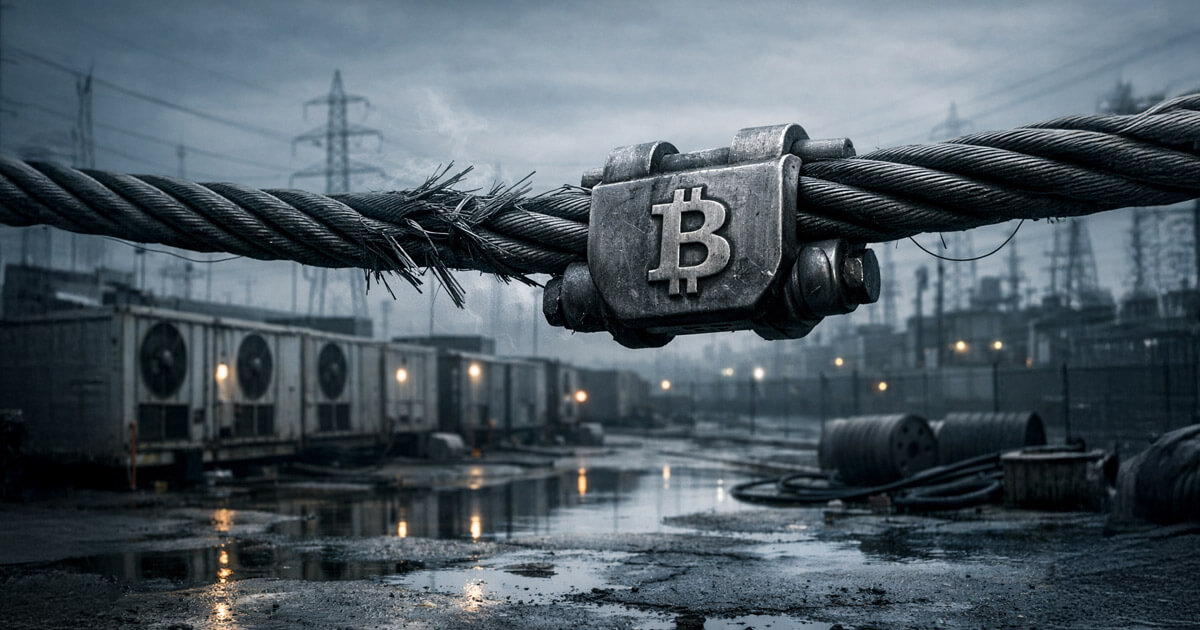
Bitcoin’s mining industry often looks healthy from the outside when the network continues producing blocks and price action stays in focus. But beneath the surface, the real story is often told by operational data rather than headlines. A recent retreat in Bitcoin mining difficulty may seem like a small technical adjustment, yet it points to a much larger issue. More importantly, another survival-focused metric suggests many miners are under far more pressure than the market may realize.
Why a Difficulty Drop Matters
Bitcoin difficulty is designed to keep block production stable. When too much computing power leaves the network, difficulty adjusts downward so blocks can still be mined roughly every ten minutes. On paper, a drop in difficulty can sound positive for the miners who remain because it slightly lowers competition. Their machines may earn a bit more Bitcoin for the same amount of work.
However, difficulty does not fall in a vacuum. It usually drops because some miners have already been forced offline. That means the adjustment is often less a sign of relief and more a sign of pain. It reflects that weaker operators may no longer be able to sustain their business under current market conditions. When that happens, the difficulty decline becomes a symptom of distress rather than a catalyst for recovery.
The Survival Metric That Really Counts
The more important issue is not difficulty itself but miner profitability and cash survival. A mining company can survive temporary volatility, but once its revenue consistently falls below its operating costs, the business starts to bleed. This is where the so-called survival metric becomes critical. Whether measured through hashprice, cash flow per terahash, or profit margins after electricity and hosting costs, the message is the same: many miners are earning too little to comfortably remain online.
This metric matters because it captures real economic pressure. Difficulty may fluctuate every adjustment period, but survival metrics reveal whether miners are actually covering expenses. If power bills, debt obligations, equipment costs, and maintenance are eating away at revenue, even a modest difficulty decline may not be enough to save struggling operators. In that environment, miners are not expanding. They are enduring.
Why 2026 Looks Especially Harsh for Miners
The mining sector entered 2026 with several structural challenges already in place. The impact of the last halving continues to weigh heavily, since miners now earn fewer Bitcoin per block than before. At the same time, competition has not disappeared. Large industrial miners are still deploying efficient machines, which means smaller or less efficient firms are constantly being squeezed.
Electricity costs remain another major threat. Mining is ultimately an energy business as much as it is a Bitcoin business. When power prices stay elevated or become unstable, profit margins shrink quickly. For miners operating older hardware or relying on expensive hosting arrangements, the economics can become brutal. In these conditions, a small drop in difficulty may offer only temporary breathing room, not a meaningful turnaround.
Pressure Builds Long Before Capitulation Becomes Obvious
One of the biggest mistakes observers make is waiting for a dramatic collapse before recognizing stress in the mining sector. In reality, miner distress often builds gradually. First, operators slow new machine purchases. Then they liquidate more of their Bitcoin reserves to cover expenses. Later, they may shut down inefficient rigs or renegotiate debt. By the time a noticeable wave of capitulation appears, the damage has usually been building for months.
That is why the survival metric is so valuable. It highlights weakness before it becomes visible in public headlines. A declining profitability profile can quietly signal that miners are depleting reserves, losing flexibility, and becoming more vulnerable to any further decline in price or increase in costs. The industry may look stable on the surface while many companies are actually operating in survival mode.
What This Means for Bitcoin Itself
Miner stress does not automatically mean Bitcoin is in danger, but it can have broader market implications. When miners are under financial strain, they are more likely to sell the Bitcoin they produce instead of holding it. In some cases, they may even sell reserves. That adds supply pressure to the market at times when investor demand may not be strong enough to absorb it smoothly.
At the same time, prolonged miner pain can lead to consolidation. Larger and more efficient firms may emerge stronger, while smaller players disappear or get acquired. This can improve operational efficiency across the industry, but it also changes the competitive landscape. In that sense, miner distress is not just a short-term earnings problem. It reshapes the structure of the entire mining ecosystem.
A Small Technical Signal With a Bigger Warning
The recent difficulty retreat should not be dismissed as routine network noise. It may be modest in size, but the context behind it matters far more than the number itself. If the true survival metrics are pointing to shrinking margins, cash burn, and weakened resilience, then the mining industry is facing a more serious problem than a casual observer might assume.
Ultimately, difficulty tells us how the network is adjusting. Survival metrics tell us how miners are coping. And right now, that distinction appears to be crucial. The network may continue functioning as designed, but many of the businesses securing it could be under severe financial pressure. That is the signal worth watching most closely.
FAQs
Why is a drop in Bitcoin difficulty not always good news for miners?
A lower difficulty can slightly improve earnings for miners who remain online, but it often happens because other miners have already been forced out. That makes it more of a warning sign of industry stress than a straightforward benefit.
What is the miner survival metric?
It refers to the economic measures that show whether miners can keep operating profitably. This may include profitability per unit of hashpower, cash flow, operating margins, or the ability to cover electricity and equipment costs.
How does the halving affect miner stress?
The halving reduces the Bitcoin reward miners receive for each block. If Bitcoin’s price does not rise enough to offset that drop, miners face tighter margins and greater financial pressure.
Can miner distress affect Bitcoin’s price?
Yes, it can. Struggling miners may sell more of their mined Bitcoin or reserves to stay afloat, which can add selling pressure to the market.
Does miner stress threaten the Bitcoin network?
Usually not in a direct way. Bitcoin is built to adapt through difficulty adjustments. But miner stress can still impact market sentiment, industry structure, and short-term supply dynamics.