

The Old Mining Rule Has Cracked
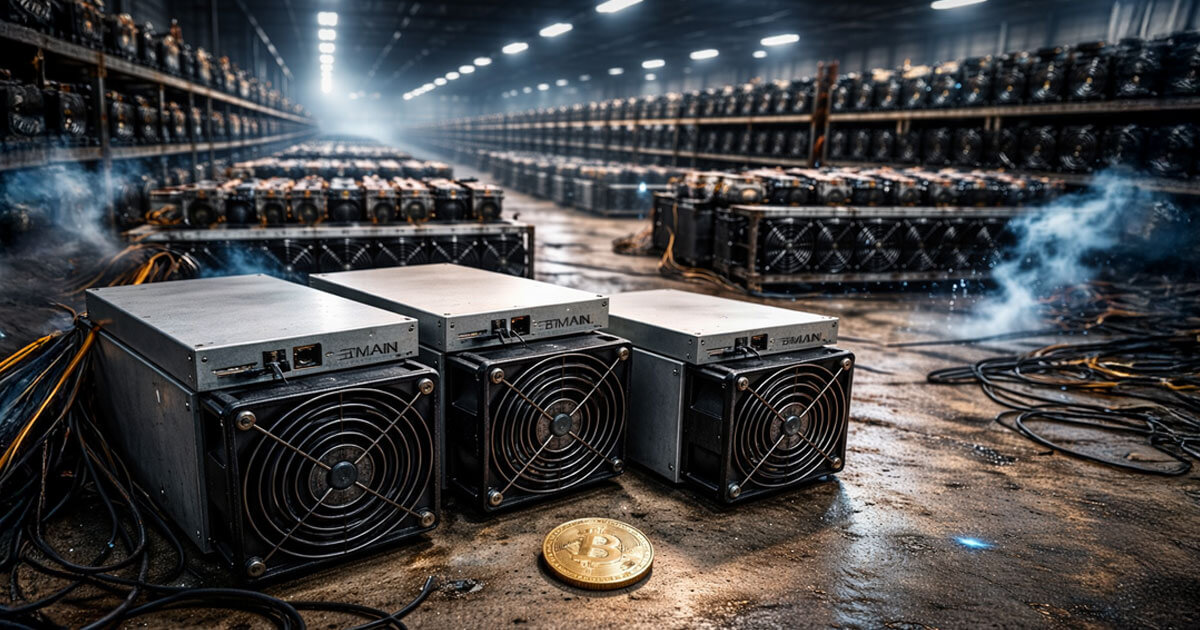
For years, one of the most accepted ideas in Bitcoin mining was simple: when Bitcoin goes up, mining machines get more expensive. That rule made sense in earlier cycles because rising BTC prices usually lifted miner profitability, increased competition for hardware, and pushed ASIC prices sharply higher. But Bitmain’s late-December decision to cut mining rig prices suggests that this old relationship no longer works the way it once did. Even with Bitcoin holding strong, miners are no longer rushing to pay inflated prices for hardware, and that change says a lot about where the industry stands now.
Why Higher Bitcoin Prices Are No Longer Enough
The reason behind this shift is miner economics. A strong Bitcoin price does not automatically translate into healthy mining margins anymore. What matters more now is hashprice, or the revenue miners earn for each unit of hashrate they operate. In November 2025, hashprice remained weak, with Luxor data cited in the article showing an average near $39.82 per PH per day and even dropping to $35.06 on Nov. 22, while network difficulty averaged about 153.33 trillion. That combination squeezed profitability and made miners far more cautious about buying new machines, even though Bitcoin itself remained relatively strong.
The Real Problem Is Profit, Not Price
This is the key change in the mining market. In the past, hardware demand was often driven by price momentum and scarcity psychology. Miners feared missing out, so they rushed to secure machines before prices rose even more. Today the buying decision looks far more disciplined. Operators are running basic payback calculations and refusing to overpay if margins do not justify the investment. The article’s math makes the point clearly. At roughly $40 per PH per day, a 200 TH machine would generate about $8 in gross daily revenue. But with efficiency around 19 J/TH and power near six cents per kilowatt-hour, electricity alone can eat up most of that return, leaving only a narrow margin before other costs are considered.
That changes everything. If miners are only clearing a small daily profit, then the value of a machine is no longer determined by hype or scarcity. It is determined by how long it takes to earn the money back. Once that happens, ASIC pricing becomes less about market excitement and more about cold financial logic.
Bitmain’s Discounts Show the Industry Has Matured
Bitmain’s discounts make that new reality impossible to ignore. According to the report cited in the article, some S19 Hydro variants were quoted as low as about $3 per terahash, while certain S21 hydro and immersion models were being discussed around $7 to $8 per terahash before coupons. The S19 XP+ Hydro bundle was listed near $4 per terahash, with shipments scheduled for January 2026. Those are not the numbers of a market driven by panic buying. They are the numbers of a market where manufacturers know customers are price-sensitive and unwilling to chase equipment just because Bitcoin is performing well.
This also suggests that Bitcoin mining has become more industrial and less emotional. Earlier cycles were marked by shortages, long lead times, and fragmented distribution, all of which made sudden repricing easier. This cycle looks different. Manufacturers face tighter competition, more product tiers, and pressure from the secondary market. That makes it harder to maintain the old pricing power miners once accepted during bull runs.
Scarcity Has Moved From Machines to Power
Another major change is that the true bottleneck may no longer be the machine itself. The article points out that Bitmain is increasingly bundling rigs with hosting packages, including power pricing and management fees. That matters because many miners are no longer just buying equipment; they are buying access to reliable power, deployment infrastructure, and operational certainty. In a market where energy access is often harder to secure than the hardware itself, the center of scarcity may have shifted away from ASIC inventory and toward efficient megawatts.
That shift is important because it changes what miners value. If power access and hosting quality become the real constraints, then a machine’s sticker price becomes only one part of the equation. Manufacturers have to sell a full operating solution, not just a box with chips inside.
AI Is Also Changing Mining Incentives
There is another reason miners are not blindly expanding hashrate: many companies now have alternatives. Public Bitcoin miners have increasingly looked at AI and high-performance computing as additional revenue paths. That means some capital that might once have gone into new mining rigs is now being considered for data center upgrades or diversified infrastructure. In other words, miners are not just asking whether a new ASIC is worth buying. They are asking whether the money could earn a better return somewhere else entirely.
That kind of capital discipline further weakens the old rule that Bitcoin price alone controls hardware demand. The mining market is no longer living in a world where every bullish BTC move automatically creates a hardware frenzy.
A Dead Rule and a Smarter Market
Bitmain’s price cuts are more than a temporary promotion. They reflect a structural change in how the mining economy works. The old belief that stronger Bitcoin prices must lead to more expensive rigs has been broken by compressed hashprice, higher difficulty, tighter margins, better market competition, and changing capital priorities.
That does not mean mining is broken. It means the market has grown up. Buyers are more rational, manufacturers are more flexible, and profitability matters more than narrative. In that sense, Bitmain’s move may be remembered as more than a discount event. It may mark the moment the industry admitted that one of Bitcoin mining’s oldest rules no longer applies.
FAQs
Why did Bitmain cut mining rig prices?
Bitmain cut prices because miner profitability weakened as hashprice fell, making buyers less willing to pay premium prices for new hardware.
What was the old Bitcoin mining rule?
The old rule was that when Bitcoin’s price rose, ASIC mining machines would also become more expensive because demand and scarcity increased.
Why is that rule considered dead now?
It is considered dead because strong Bitcoin prices are no longer enough to lift hardware prices if mining margins remain weak and payback periods look unattractive.
What matters more than Bitcoin price for miners today?
Hashprice, electricity cost, network difficulty, hosting access, and overall return on investment now matter more than price momentum alone.
How is the mining market changing overall?
The market is becoming more industrial, more price-sensitive, and more focused on operational efficiency rather than hype-driven hardware demand.